

Your cell phone can hold decades’ worth of texts, photos, emails, location data, financial data, and private conversations. Utah police may demand to see it during a traffic stop or arrest you and ask to see it. They may even demand your passcode or seize it as evidence. But can they search the entire phone?
For most purposes, police must get a valid search warrant before reviewing the digital information stored on a cell phone. An arrest by itself does not give police free reign to search a phone. There are exceptions though, including consent, emergencies, and others.
Police have searched or seized your phone as part of a Utah criminal investigation? Then the specific facts of your case matter. This article will cover the general rules and explain why contacting a criminal defense lawyer quickly might be beneficial.
Do Police Need a Warrant to Search Your Phone?
Generally speaking, yes. Both the United States Constitution and the Utah Constitution protect citizens from unreasonable search and seizures. Utah Const. art. I, § 14 also requires warrants to be supported by probable cause and specifically describe the place to be searched and items to be seized.
In 2014, the United States Supreme Court unanimously ruled that police must obtain a warrant before searching the digital contents of a cell phone. Riley v. California. The Court stated that modern phones differ significantly from other physical items a person may carry. Phones hold many personal details about our lives.
While officers may be able to temporarily seize your phone to protect its contents while they get a warrant, they can’t just search it because you are under arrest.
Can Police Search Your Phone if You Give Consent?
One reason the police can search your phone without a warrant is when you consent to it. Questions an officer may ask you are:
- “Can I take a quick look at your phone?”
- “Will you unlock it for me?”
- “Do you mind if I check your messages?”
- “Can you show me your recent calls or photos?”
You can consent to any of these questions giving law enforcement the right to search at least some of your phone. Consent can later be argued. Was it voluntary? How far did your consent go? Did you agree to review one text message or did you allow them to do a forensic sweep of every app/file on your device?
You have the right to clearly state that you do not consent to any search. Do not physically resist an officer, yell, or try to snatch your phone away. Simply remain calm, clearly state you do not consent to a search, and request to speak with an attorney.
Does an Arrest Allow Police to Search a Phone?
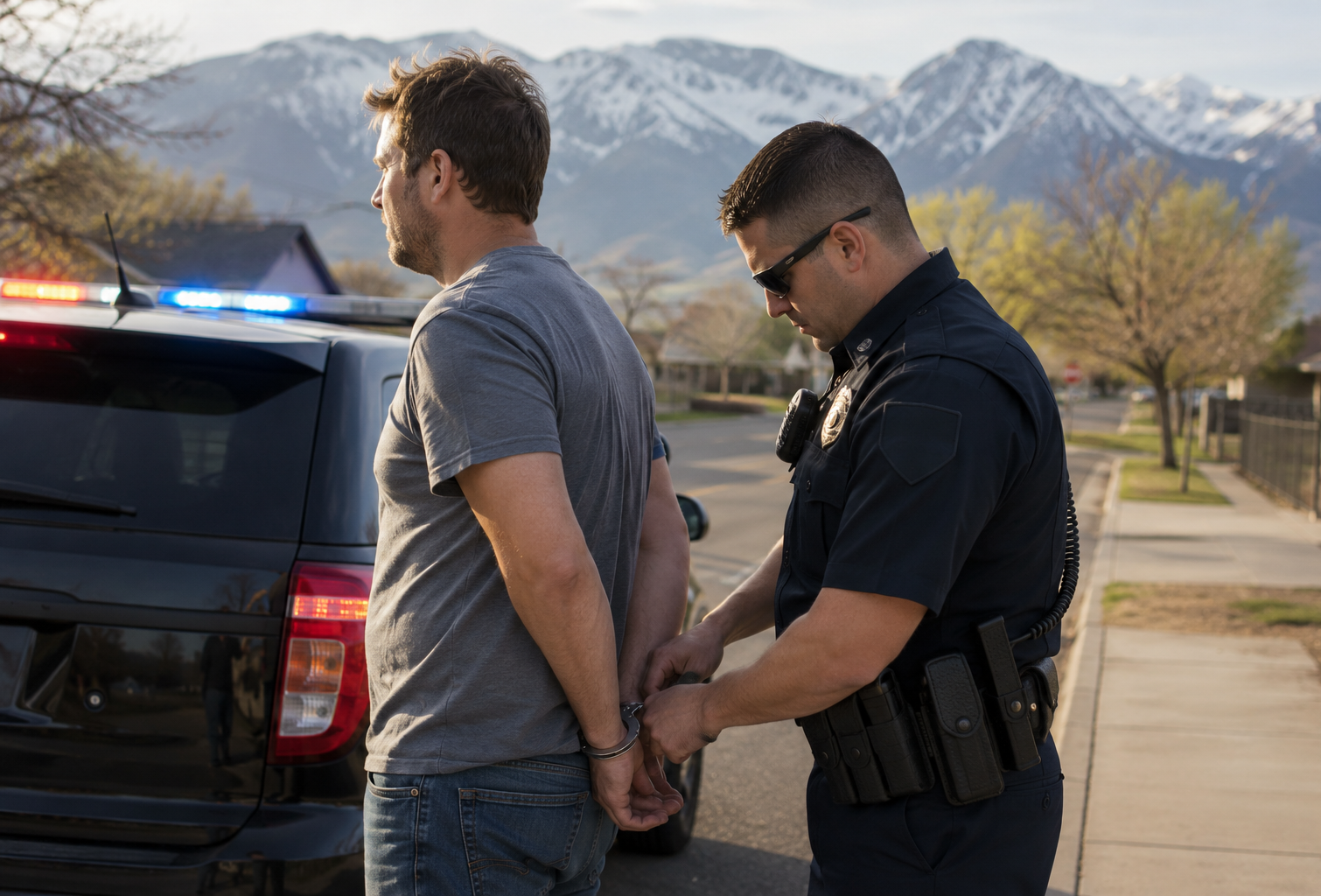
Officers may search some items that law enforcement officers find on an arrested person because they reasonably believe doing so will protect their safety or preserve evidence from destruction. But the court ruled emphatically that logic doesn’t automatically extend to cell phones’ electronic data.
Police can still seize the phone and take steps to secure it, such as turning the phone off or putting it in a faraday bag, until they secure a warrant. Seizing a cell phone is different than searching it for data. Legality of the initial seizure may be challenged in a criminal matter.
What Should a Cell Phone Search Warrant Include?
A search warrant shouldn’t be a blank check. Typically, law enforcement will have to provide an affidavit showing probable cause that the phone may contain evidence related to a crime. The warrant will name the device and specify the information officers are permitted to search for or take.
The warrant may allow officers to search for specific types of information based on the investigation. This could include:
- Communications with named individuals
- Messages sent during a defined period
- Photographs or videos connected to an alleged offense
- Location information relevant to a particular event
- Call records, contact information, or specified app data
Issues can arise if the warrant is overly broad, has little to no nexus between the suspected crime and the phone or allows for a nearly unrestricted search of all digital information. An attorney can review the warrant, affidavit, search procedures, and seized information.
Are There Exceptions to the Warrant Requirement?
Technically, a warrant is required but there are a few narrow exceptions that allow a warrantless search of a phone. The government must prove that an exception to the warrant requirement applies.
Voluntary Consent
If someone voluntarily allows police to inspect their phone or computer, officers do not need a warrant. As mentioned above, courts will look at the specific facts of each case (the totality of the circumstances) to determine whether a person gave voluntary consent and exactly what the person consented to police searching.
Emergencies

Officers also may act without a warrant if an emergency situation exists requiring their immediate attention. Courts use a test that involves balancing the seriousness of the alleged offense and whether there was time to secure a warrant before searching. Examples of emergencies might include preventing serious injury or death.
However, the mere possibility that digital evidence could be deleted does not necessarily create an emergency justifying a warrantless search. Generally, a court will look at the totality of the circumstances confronting officers at the time.
Abandonment or Lack of a Reasonable Expectation of Privacy
The government may also argue that someone abandoned a device or item and therefore did not have a reasonable expectation of privacy in it. Whether a phone was abandoned is determined by how a person acted and the circumstances they were in, not just because it was lost or temporarily forgotten somewhere.
There are other special rules that may apply when your phone is searched in connection with a probation or parole condition, at school, at the border, or by someone who is not acting on behalf of the government.
Can Police Make You Provide Your Passcode in Utah?
Issues with police demanding access to your cell phone can involve both Fourth Amendment search problems and Fifth Amendment self-incrimination problems.
The Utah Supreme Court recently ruled that verbally providing a cell phone passcode is a testimonial communication for Fifth Amendment purposes. Under the State v. Valdez , if officers order a defendant to verbally provide a phone passcode, the defendant can refuse and that refusal cannot be used against him at trial.
The Valdez decision dealt with a request to verbally provide a memorized passcode. The court did not hold that one rule would apply to all methods of unlocking a device. Demanding fingerprint or facial-recognition access to a device, ordering someone to provide an unlocked device, and other techniques may create separate issues. If police ask you for your passcode or try to force you to unlock your phone, ask an attorney. Don’t assume this rule applies to every situation.
What About Information Stored in the Cloud?
A phone may allow a user to search information stored outside of the device itself, like email, cloud-based backups, social-media accounts, or photographs synced to a remote server. The authority to search the phone itself may not permit every search of remotely-stored accounts.
Utah’s Electronic Information Privacy Act outlines the circumstances under which the government can obtain certain electronic-device and electronic-information data. Whether a warrant, court order, subpoena, or some other legal authority is required depends on the type of information law enforcement officers are seeking and where that information is stored. The specific language granting that authority can be important in determining the validity of a digital search.
What Should You Do If Police Ask to Search Your Phone?
If law enforcement asks for access to your device, consider these practical steps:
- Stay calm and do not physically interfere. Resisting an officer can make the situation more dangerous and may lead to additional allegations.
- Ask whether you are free to leave. If you are free to go, leave calmly. If you are detained or arrested, do not argue about the detention at the scene.
- Clearly state that you do not consent. A simple statement such as “I do not consent to a search of my phone” creates a clearer record than remaining ambiguous.
- Do not answer investigative questions. You may identify yourself when legally required, but you can state that you are exercising your right to remain silent and want an attorney.
- Do not delete or alter information. Attempting to erase messages, destroy the phone, or remotely wipe data could create serious legal problems.
- Contact a Utah criminal defense attorney promptly. Counsel can assess the seizure, any warrant, the scope of the search, and statements made during the encounter.
What Happens if Police Conduct an Illegal Phone Search?
Officers’ illegal search may lead to filing motions to suppress evidence. If the defense files a motion to suppress evidence obtained by an unconstitutional search and it is granted by the court, illegally obtained evidence will be suppressed (thrown out) from the prosecution’s case.
Suppression is not guaranteed just because officers violated someone’s rights. For example, prosecutors may be able to show that officers “good faith” relied on a warrant, would have inevitably discovered the evidence anyway, or that another exception to the warrant requirement applies. Determining whether evidence is admissible will require the judge to review body-camera videos, consent forms, warrant affidavits, computer forensic reports, timestamps, and officer testimony.
Your lawyer will also want to know if investigators exceeded the authorized scope of the warrant. Even if officers lawfully seized your phone and obtained a warrant, their subsequent search, retention, or use of your data can still be challenged.
Speak With a Utah Criminal Defense Attorney
Phone searches reveal private information and can become a key piece of evidence in a criminal case. Police in Utah typically need a warrant to search through a phone’s digital data. However, consent, exigent circumstances, the language of a warrant, and how your phone was unlocked can significantly impact your rights.
Larsen, Larsen, Nash & Larsen can review how police accessed and searched your cell phone, help you understand if your rights may have been violated, and explore ways to suppress digital evidence. Call the law office today at (801) 964-1200 to speak with a knowledgeable Utah criminal defense attorney.
This article contains general information but is not a substitute for legal advice. Search- and-seizure rules may vary based on the specific facts involved. Additionally, changes in the law may occur. For advice on your legal issue, please speak with a qualified attorney.